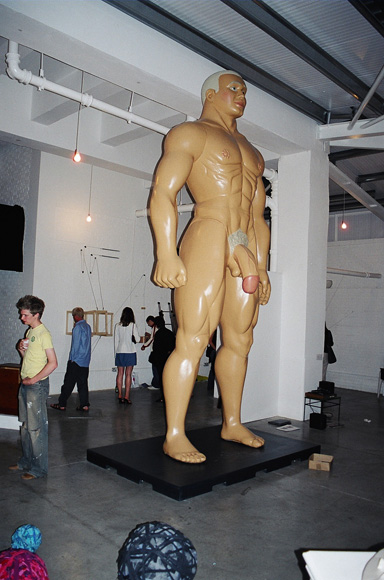
16 Feet Billy – A Sculpture by the Artist Alex Hancock
16 Feet Billy
Billy´s Cultural Impact and Legacy
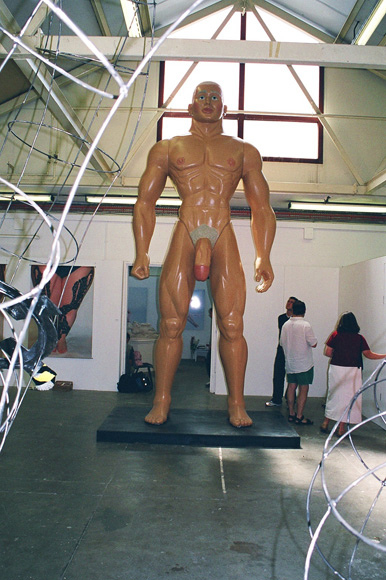
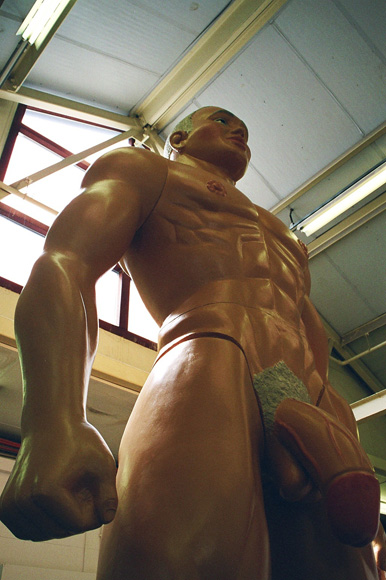
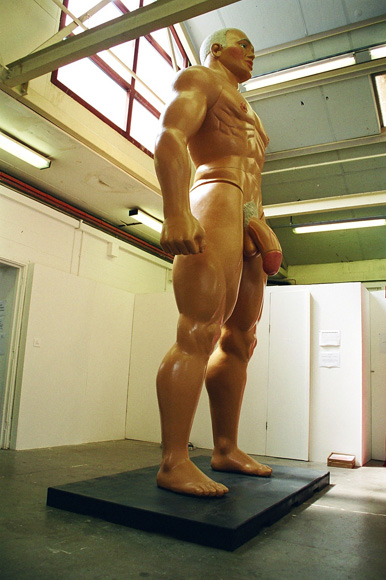
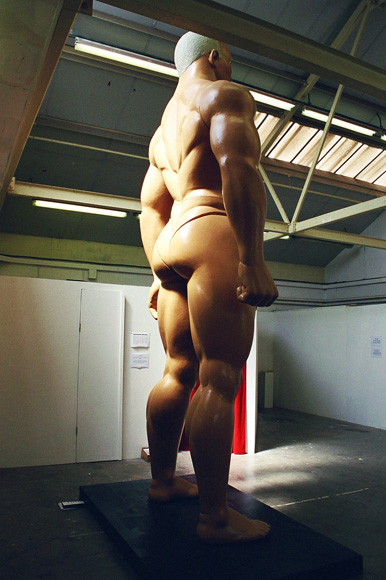
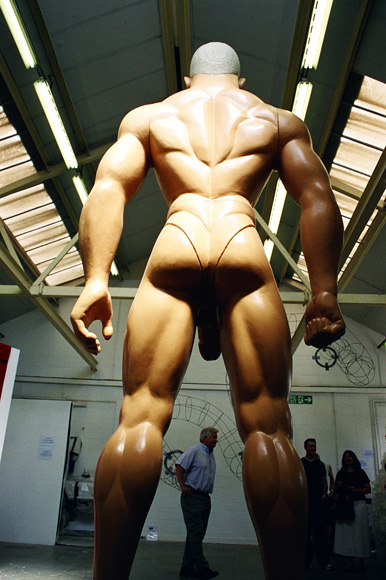
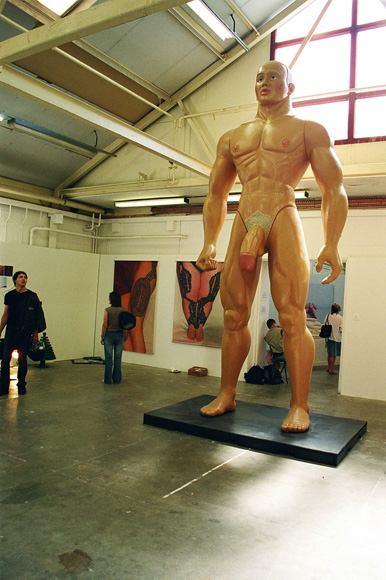
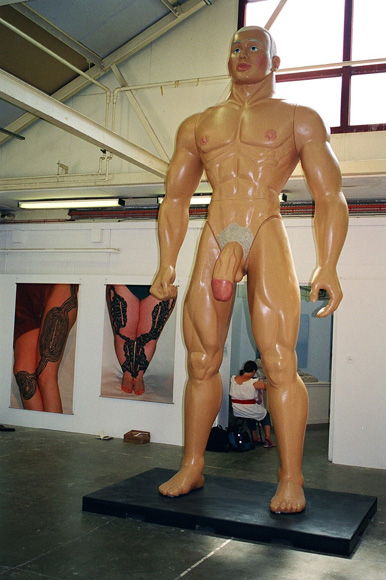
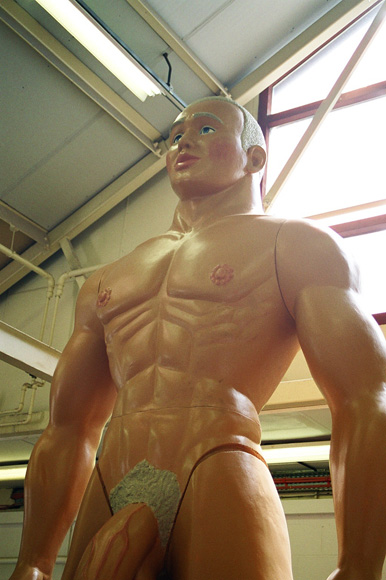
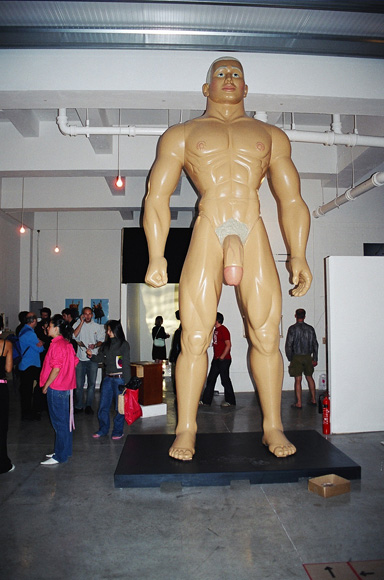
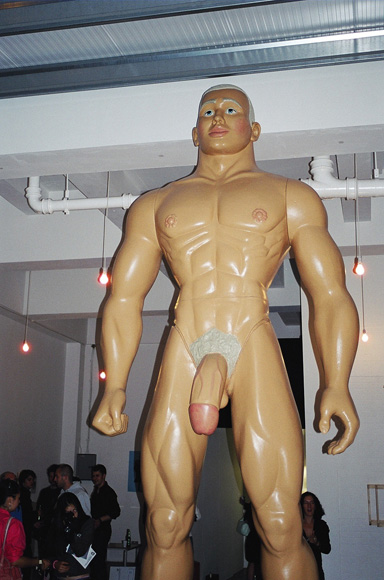
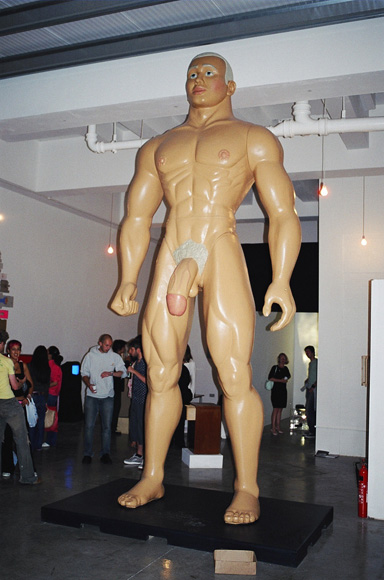
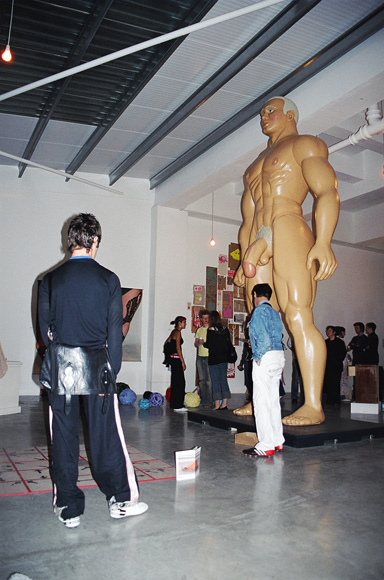
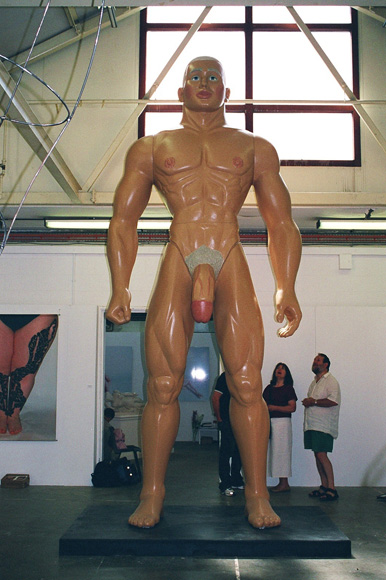
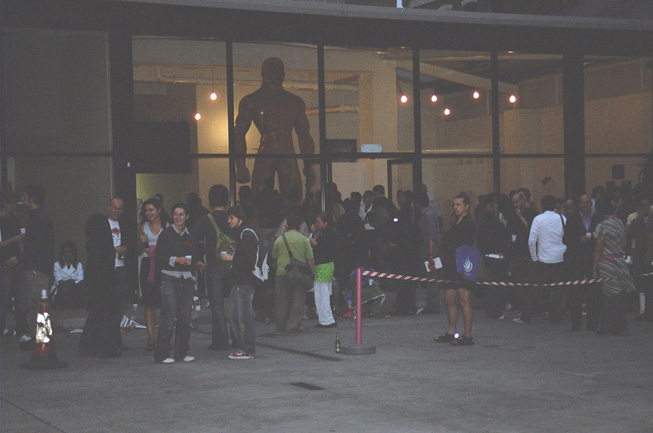
At the 2003 Freerange Arts Exhibition, held at the Truman’s Brewery in London, the artist Alex Hancock unveiled one of his most striking works to date: 16 Feet Billy. This monumental sculpture, standing at an impressive 16 feet (4.9 meters), is a hyper-realistic portrayal of Billy naked. Crafted from fiberglass and resin, the piece captured both the form and essence of Billy with remarkable detail.
Hancock’s 16 Feet Billy is not merely a technical exercise in replication; it invites viewers to contemplate the human form from an entirely new perspective, drawing attention to the scale and vulnerability of the body in a public setting. The work seeks to explore themes of identity, exposure, and the often-overlooked subtleties of physicality. The oversized dimensions emphasize the tension between personal privacy and the unavoidable nature of public scrutiny, offering a bold commentary on our relationship with the body in contemporary art.
Hancock explained the concept behind 16 Feet Billy: “To me Billy is a three dimensional form that represents a period of history, being born from an Art AIDS Benefit to become an iconic figure. However, at this point, I think Billy needs more exposure to cement his role as a prominent figure in history. It could be easy for people not to look beyond the comic nature of Billy, by magnifying Billy to 16 Feet in height and placing him in an art context I hope to allow a larger and broader audience to be challenged by the issues that Billy raises. Billy is not presented clothed, so he is shown in his simplest form. My ultimate ambition would be to produce a version in bronze or stone. The very solid nature of the materials could mean that the concept of Billy would be around for many years.”
In 2001, Billy was selected for inclusion in the prestigious permanent exhibition Making the Modern World at The Science Museum, London, a testament to Billy’s cultural and historical significance. This exhibition, which features over 1,000 manufactured items that have shaped human experience, highlights Billy as a remarkable intersection of art and industry. Both an artwork and a mass-produced object, Billy’s presence in this context underscores its profound influence on contemporary perceptions of identity, consumerism, and mass production in the modern world.
Additionally, the museum’s acquisition of a Carlos Doll further solidifies The Science Museum´s broader conversation about the intersections of art, commerce, and societal change, positioning Billy and Carlos as emblematic figures within this larger cultural landscape.
Billy has been prominently featured in a diverse array of exhibitions and collaborative projects with renowned museums, art galleries, and cultural institutions such as the Freedom Gallery in London, the Throckmorton Gallery in New York, the Andy Warhol Museum in Pittsburgh, the Keith Haring Foundation and The New Museum of Contemporary Art in New York and Central Saint Martins – University of the Arts, London. Since 2000, both Billy and Carlos have been the focus of numerous academic essays and scholarly publications, underscoring their significance in contemporary culture.