An Artwork By The Artist Nigel Grimmer – Passing
Passing
Exhibited at Central Saint Martins, University of the Arts London
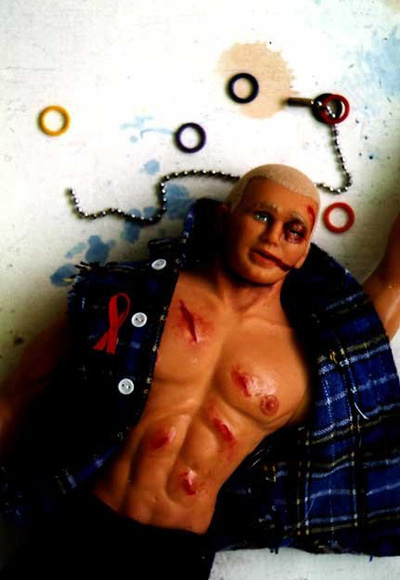
Nigel Grimmer’s evocative work Passing first appeared in the gallery window of Central Saint Martins, University of the Arts London, during the late 1990s, standing as a poignant commentary on violence and identity. The piece centers on a Billy Doll, battered and bruised, bearing the marks of brutal assault—left, as the title suggests, “for dead.” Set against the backdrop of a bustling Charing Cross Road, the installation’s proximity to the public created a volatile interaction. While initially shielded by the gallery’s glass, the Billy Doll’s vulnerability resonated deeply, and the barrier itself became a site of attack, as the glass was shattered—an unsettling parallel to the fragility of marginalized lives in the public sphere.
Grimmer’s Passing transcends mere objectification, reflecting the harsh realities faced by many in the LGBTQ+ community, even in countries where homosexuality is legal. Despite legal protections, such as hate crime legislation in parts of the European Union and the United States, incidents of bullying, assault, and homicide against homosexual individuals persist globally. This work is not just a commentary on physical violence but also speaks to the systemic verbal and psychological abuses many still endure.
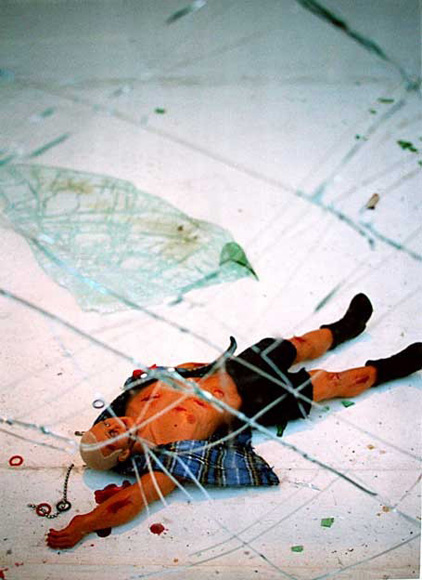
Nigel Grimmer’s exploration of identity and queerness extends beyond Passing. His ongoing project, The Gay Doll Museum, launched in London, preserves and documents this narrative through over 200 exhibits, including the now-iconic Billy, Carlos, and Tyson Dolls. In 2019, this collection was showcased at The Art Workers Guild in London, offering a visual archive that blends art, activism, and history. Through these figures, Grimmer curates a dialogue about queer history, representation, and with the artwork Passing the ongoing struggles against violence and erasure.